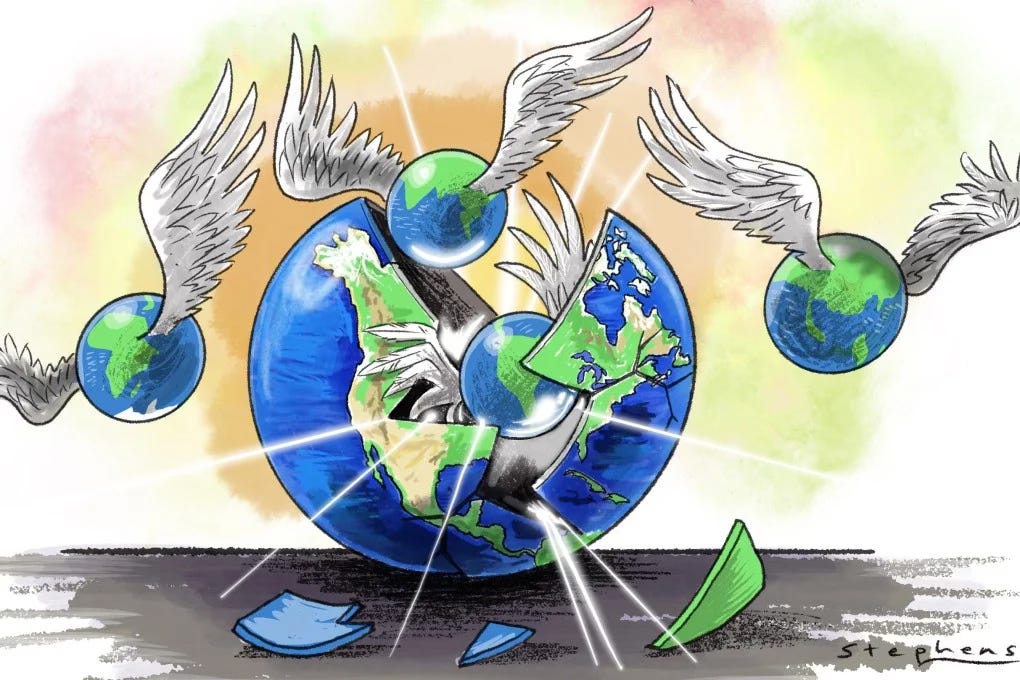
Foresight Economica argues that Donald Trump’s desperate plea to allies in the Arabian Gulf and Europe exposes the real danger that threatens American power.
A prolonged disruption in the Strait of Hormuz is not just an energy crisis. It is a generational monetary event that threatens to increase the rapid decline US geopolitical power.
Once oil stops flowing normally, the levers that governments rely on begin to lose effectiveness at the same time. We examine how below.
The Immediate Shock: Energy Becomes Power
In normal conditions, oil is priced, traded, hedged, and financed through deep global markets based on the dollar (mostly).
A sustained blockage changes the nature of oil entirely:
-
It stops being a market commodity
-
It becomes a strategic asset
That shift forces all governments into a different mode of behaviour since they are no longer optimising for price. They are securing supply. And once that happens, the entire financial architecture built around predictable energy flows starts to fracture.
We will explore how the Fed may react as well as other governments in more detail below.
The First Limit: Inflation Without Control
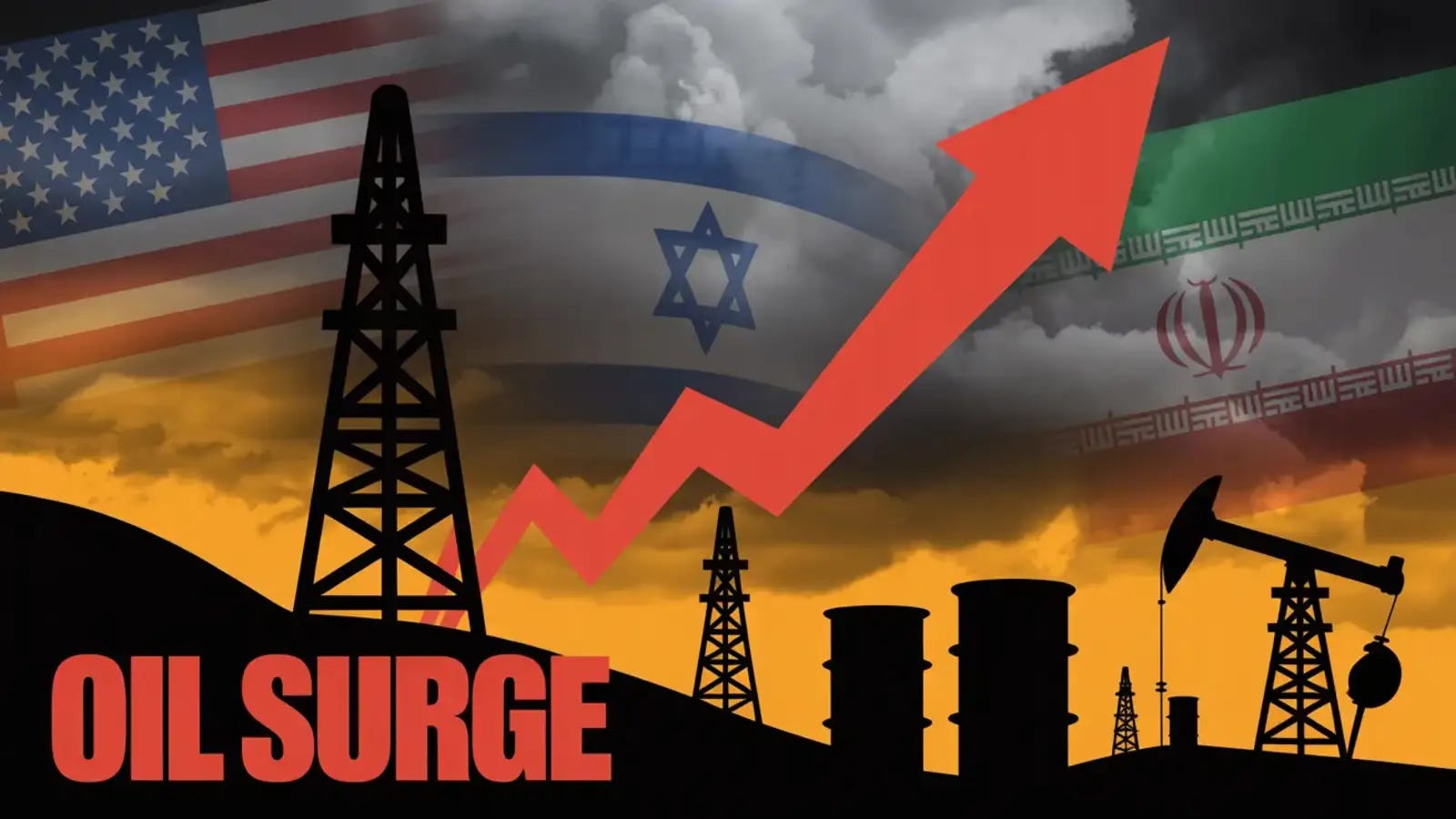
Energy supply-driven inflation is different from demand-driven inflation. Demand inflation can be controlled because central banks can suppress demand. However supply inflation is due to a lack of supply.
Central bankers can’t produce oil.
The prices will spike, because energy is a vital necessity. Raising interest rates is no longer a tool that can control such inflation.
It only compresses the economy, because dampening demand does not reduce the cost of inputs. Energy and production costs remain elevated, so businesses face higher costs while revenues weaken, since demand remains flats or decreases. This creates a squeeze, often triggering recession.
This creates the first dilemma:
-
Fight inflation → deepen recession
-
Support growth → allow inflation to run
There is actually no clean policy responses and markets recognise that quickly. This is the case for America and every other economy around the world that depends on externally sourced energy, reliant on the dollar system. Focussing, specifically on America for now, let’s discuss the second policy constraint.
The Second Limit: America’s Budget Deficit Spirals
At the exact moment the economy slows, The Fed faces rising costs:
-
War expenditure increases
-
Energy subsidies expand
-
Industrial support becomes necessary
-
Tax revenues fall
This leads budgets deficits to widen aggressively.
Normally, this is manageable because global capital absorbs sovereign debt, especially US Treasuries.
But under a Hormuz shock, that assumption weakens because the system that generates global dollar demand, energy trade, is being disrupted due to the inability to supply oil and then price it in dollars.
The Hidden Risk: Fed Loses control of Dollar Recycling
As explained in our earlier article, the dollar system depends on a simple loop:
Energy is traded in dollars, exporters accumulate dollars, those dollars are reinvested into US assets.
A prolonged disruption does three things:
-
Reduces the volume of dollar-based energy trade
-
Forces countries to divest away from the dollar which then devalues the dollar further due to excess dollar in circulation; a double whammy for the Federal Reserve.
-
Forces countries into alternative settlement mechanisms. They may be forced to go to the Chinese system or at worst create their own one.
In crisis conditions, countries don’t wait for market efficiency because energy becomes a survival issue. They prioritise securing supply over pricing, speed over optimisation, and reliability over financial alignment.
That means they will use whatever works. Whether that means bilateral deals, alternative currencies, even barter arrangements, because energy security overrides monetary alignment.
This weakens the structural demand for dollars at precisely the moment the US needs to issue more of them and explains why things spiral out of control.
The Fed’s Constraint Becomes Visible
At this stage, The Federal Reserve faces a narrowing corridor:
-
Raise rates → risk debt instability and financial stress on already weak economies
-
Lower rates / print → risk currency debasement and weakening the dollar even more
Under normal conditions, they can balance these forces. Under energy shock, they cannot. Because:
-
Inflation is supply-driven
-
Deficits are expanding
-
External demand for debt is weakening
Add to this the deep structural fault lines with the economy. America has been operating what some economist called “a big Ponzi scheme” for decades and has been operating in a deficit for too long. Its economy is dependent on imports, has huge labour shortages in key areas and outsourced manufacturing abroad.
This exposes the deep structural flaw in the system. Hard economic discipline, lacking for decades, will be impossible to recreate in weeks, months or even years.
The Real Risk They Are Trying to Avoid
Policy makers aren’t really worried about oil getting expensive.
What worries them is something deeper: a world where the system itself starts to break.
That would mean energy is no longer traded smoothly through global markets, demand for the dollar begins to weaken, and governments can no longer rely on foreign investors to fund their deficits.
Instead, they have to finance themselves at home, with central banks stepping in as the main buyers of government debt. And once that happens, the consequences are clear.
American debt is a whopping $39 trillion. If creditors start calling in this debt America will have no choice but to pay or potentially fight more wars (either physical or economic). American interest payments alone are currently $1.22 trillion per year. For context Medicare costs them $1 Trillion.
Without the ability to print dollars to pay for their debts and debt servicing obligations this will get worse. Creditors will demand higher interest payments. The Fed’s debt servicing needs could easily double in a short amount of time.
In the short term the risk of increasing the annual deficit, which stands at $900bn as of 2025 is very high, with no ability for the Fed to print its way out of payments.
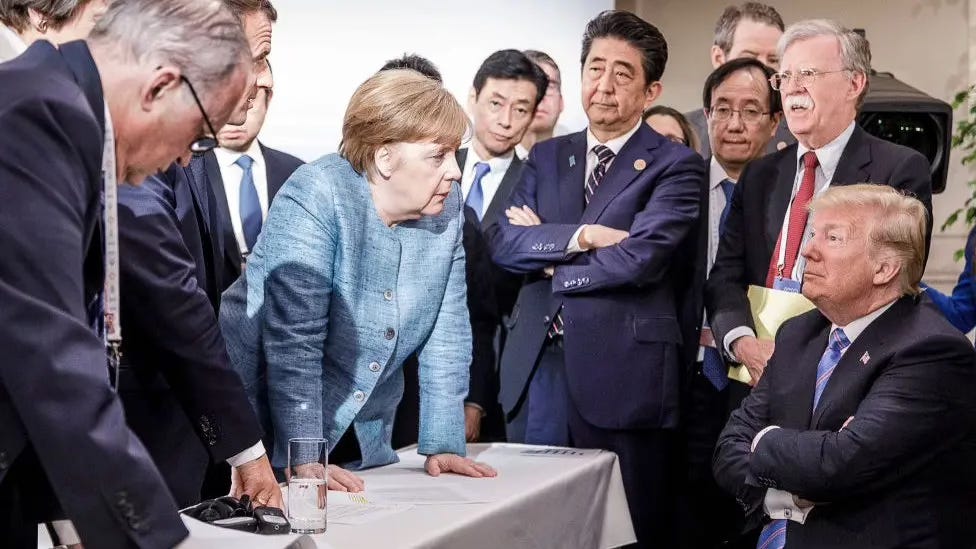
This point is not lost on Donald Trump, who has at times been threatening, at other times imploring and even uncharacteristically encouraging his “allies” to support this war in a series of confused messaged, The response has been emphatic.
French General Yakovleff mocks Trump about the war with Iran:
“The U.S. asks us for help and wants us to share the cost of their fiascos.
Joining Trump’s coalition today is like buying a ticket to dinner and dancing on the Titanic the evening after it hit the iceberg.”
Meanwhile The Iranians have been mocking Trump for
“begging countries to come to their aid” (Abbas Aragchi)
This creates a very real and sobering potential scenario; the end of American global influence.